collection seven, furniture guide, interior design
How to Zone a Living Room
The Single Room as Multiple Places
The open-plan living room — or the larger, multi-function living room common in British period properties — presents one of the most interesting challenges in domestic interior design: how to create a sense of distinct, purposeful areas within a single continuous space without the architectural support of walls or divisions. Zoning is the practice of meeting this challenge — of defining territories within a room through the deliberate arrangement of furniture, rugs, lighting and material choice, rather than through physical partition.
When zoning is done well, a large or open-plan room feels both spacious and purposeful — different areas have clarity of function and identity while the whole remains connected and coherent. When it is done poorly, the same room feels formless — too large to be comfortable, with furniture scattered across the floor plan without apparent logic or intention.
This guide examines the main tools and approaches available for effective living room zoning.
The Rug: The Most Powerful Zoning Tool Available
A well-placed rug is the single most effective zoning tool in a living room. A rug placed beneath and around a seating arrangement — with at least the front legs of all pieces resting on it — defines the conversation zone with clarity and warmth. It creates a contained world within the larger space: the floor changes beneath the arrangement, signalling that this area has a different function and identity from the surrounding floor.
For a rug to perform this zoning function effectively, it must be large enough. This is the most common rug error in British living rooms: a rug placed only in front of the sofa, with none of the other furniture sitting on it, creates fragmentation rather than unity. The rug should extend beneath the front legs of all the main pieces in the arrangement — sofa, chairs and ottoman. In larger rooms, having all four legs of each piece on the rug creates an even stronger sense of zone definition.
The gap between the edge of the rug and the surrounding walls — or the edge of the adjacent zones — also matters. A rug that extends close to the walls on multiple sides makes the zone feel too contained; one with generous clearance on all sides feels like a properly defined territory within the larger space.
Furniture Arrangement as Zone Definition
The orientation of the seating arrangement itself creates a zone regardless of the room's architecture. Furniture turned inward — facing each other across a central ottoman or table — creates a conversation zone with clear edges defined by the backs and sides of the furniture. This inward orientation is one of the defining qualities of a well-zoned seating arrangement: the pieces face each other and create an enclosed territory, rather than all facing the same wall in parallel lines.
The backs of sofas and chairs are among the most effective zone definers available. A sofa placed with its back to the circulation route through an open-plan room creates a clear boundary between the seating zone and the surrounding space. It tells the eye — and the body — where the zone ends and the open space begins.
The Golborne Sofa as Zone Definer
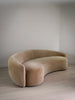
The Golborne Sofa placed at an angle to the room's axis — rather than pushed against a wall — creates a zone through its form and placement combined. Its curved back presents an interesting silhouette from the surrounding space, marking the edge of the seating zone while contributing a visual richness to the room as a whole. In an open-plan room, a sofa that is interesting to look at from behind is a genuine asset — it contributes to the room from multiple viewpoints rather than only from the front.
The Corner Sofa as Enclosed Zone
A corner sofa is one of the most architecturally effective zoning tools available in open-plan spaces. Its L-shape creates three defined edges to the seating zone — back and two sides — leaving only one side open for entry. This creates a strong sense of enclosure and containment within the larger space, defining the seating zone with a clarity that a straight sofa alone cannot achieve.
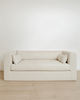
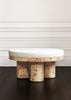
The Courtnell Corner Sofa, available in 3 and 4 seater configurations with both right and left chaise options, is among the most effective pieces in the Collection Seven range for this zoning function. Its clean proportions and generous seating capacity make it well suited to open-plan spaces where the sofa arrangement must work hard to define the living zone within a larger floor area. Paired with a substantial rug beneath it and a Ledbury Ottoman in front, it creates a seating zone that reads as complete and self-sufficient within the open plan.
Creating a Secondary Zone
In larger living rooms, a secondary zone — a reading corner, a workspace, a musical area, a children's play space — can be established alongside the primary seating zone. The key to making a secondary zone work is giving it enough definition to read as a distinct area while maintaining its relationship with the primary zone.
A single chair and ottoman, placed at a slight remove from the main arrangement and at a different angle, creates a secondary territory naturally. The change in orientation signals a different function; the slightly different position in the room reinforces it. A small floor lamp beside the chair completes the definition of the zone.
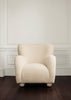
The Pembridge Chair with the Colville Ottoman makes an excellent reading corner — immediately comfortable, visually self-contained, and distinctive enough in silhouette to read as its own place within the room. The Pembridge's enveloping curved form creates a quality of enclosure even without architectural support: you feel held by the chair in a way that signals a change of register from the main seating zone.
Lighting as a Zoning Reinforcement
Lighting reinforces zones in a way that is difficult to achieve through furniture arrangement alone. A floor lamp placed within the secondary zone creates a pool of light that defines that area as distinct from the surrounding space. A table lamp beside the sofa creates warmth and intimacy within the primary zone. When zones are lit differently — the reading corner with a focused floor lamp, the main seating zone with a combination of ambient and table lighting — the functional distinction between them is felt as well as seen.
Overhead lighting that illuminates the entire room equally tends to flatten zoning. Layered lighting — ambient overall lighting supplemented by specific task and accent sources in each zone — reinforces the zone definitions and creates a room that feels different in different areas, which is precisely what zoning is intended to achieve.
Zoning With Colour and Material
A subtle change in material palette between zones — the primary seating zone in ivory boucle and chalk linen, the secondary reading zone in a slightly warmer or deeper fabric — can reinforce the functional distinction without making the room feel fragmented. The change should be gentle enough that the room reads as coherent, but distinct enough to signal the shift.
This is one of the advantages of working within a range built around a coherent palette, such as Collection Seven's. The fabrics are designed to sit together — which means a primary zone in ecru boucle and a secondary zone in fallow velvet will create a tonal relationship that reads as considered rather than inconsistent. The palette unifies; the material variation zones.
Explore the full Collection Seven range for pieces that work together to define living zones, and contact the team for guidance on specific room configurations.