collection seven, furniture guide, interior design
What Makes Furniture High Quality?
Quality Is What You Cannot See — Until You Can
The qualities that distinguish genuinely well-made furniture from merely adequate furniture are largely invisible when both pieces are new. A poorly built sofa and a well-built one may look almost identical on the day they are delivered. The differences — in frame construction, suspension quality, upholstery precision, material integrity — are hidden beneath the fabric. They become apparent slowly, through years of use, as the quality of what is underneath is either confirmed or revealed as insufficient.
This creates a genuine challenge for buyers. You are being asked to make a significant investment in qualities you cannot directly observe at the point of purchase. Understanding what those qualities are, how to assess them indirectly, and what questions to ask a maker is the most practical way to navigate this challenge — and to ensure that the furniture you invest in delivers on the quality it represents.
The Frame: Quality's Invisible Foundation
Every upholstered piece of furniture rests on a frame. The frame is the skeleton of the piece — it determines the basic form, provides the structural support for everything that follows, and determines how the piece will perform over the decades of its useful life. It is also entirely invisible once the upholstery is complete.
Timber Selection
Quality frames are built from kiln-dried hardwood. The kiln-drying process removes moisture from the timber to a specific level before it is used in construction, preventing the warping, twisting and joint failure that occurs when timber with residual moisture is used in a heated domestic environment and then dries out over time. This is not an optional refinement — it is a foundational quality requirement. A frame built from inadequately dried timber will show its limitations within a few years as the wood shifts and the joints become loose.
Common hardwoods used in quality British upholstery frames include ash and beech. Both have excellent structural properties — high strength-to-weight ratios, good resistance to splitting, and the ability to hold screws and joints reliably under sustained load. Softwoods (pine, spruce) and engineered wood products (MDF, particleboard) are cheaper and weaker; their use in frame construction is the most reliable single indicator of cost-driven rather than quality-driven manufacturing.
Joinery
How the frame is assembled matters as much as what it is made from. Mortise and tenon joints — the traditional cabinetmaking connection in which a tenon (a shaped projection on one piece) fits precisely into a mortise (a corresponding slot in another piece) — are the strongest and most durable frame connection available. Properly glued and pegged, a mortise and tenon joint will last as long as the timber itself. They are labour-intensive and expensive, which is why they appear in quality furniture but rarely in mass-produced pieces.
Dowel joints are a step down in strength but acceptable in less-stressed locations. Corner blocks — glued and screwed into the inner corners of the seat frame to reinforce the connections — are a common quality feature that significantly improves the rigidity and durability of the frame. Their presence is usually a positive indicator of quality manufacturing, even when the primary joinery is not mortise and tenon.
Suspension and Cushion Quality
The suspension system beneath the seat cushion determines both the initial comfort of the piece and how that comfort holds up over years of use. Hand-tied coil springs — the traditional approach — are the gold standard. Individual springs tensioned and tied in a grid pattern distribute the load evenly across the seat, provide a quality of response that no foam alternative replicates, and have exceptional longevity.
The cushion fill specification is the final element of the comfort system. A feather-and-foam combination fill — foam core wrapped in a down-and-feather jacket — provides the best performance across comfort, support and longevity. The foam provides structure; the feather provides the immediate softness and the quality of recovery between uses that makes a sofa feel genuinely comfortable over extended sitting.
Upholstery: The Craft That Creates the Object
Upholstery is the craft that transforms a frame and a fabric into a piece of furniture. At its highest level, it is an extremely skilled trade that takes years to master. The precision of the work — the evenness of the tension across the fabric, the sharpness of the corners, the accuracy of the piped edges, the quality of the welting and the seam work — is immediately apparent on a well-upholstered piece and equally apparent on a poorly upholstered one, if you know what to look for.
What to Look For
Seams should be straight and even. Piped edges — where a contrasting or matching cord is inserted into a seam to create a defined line — should be consistently tensioned, with no puckering or waviness. Pattern repeats on patterned fabrics should be matched across cushions and panels. The corners of cushions should be crisp and well-defined, not rounded by insufficient stuffing or pulling. Zips and fixings should be discreetly positioned and smoothly functioning.
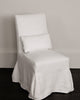
These are the marks of skilled handcraft — the evidence that the piece was made by someone who cared about the result and had the skill to achieve it. Every Collection Seven piece is upholstered by hand in London, and the evidence of this is in the consistency and precision of the work. The piped detail on the Talbot Chair, the floor-length pleating on the Aubrey Dining Chair, the clean seam lines on every sofa in the range — these are the results of craft executed to a standard that machine production cannot replicate.
Material Quality
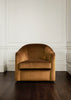
The fabric on the outside is the most visible element of quality — and the one most subject to compromise in cost-driven manufacturing. Quality upholstery fabrics are selected for their fibre content, weave construction and finishing. Natural fibres — linen, mohair, wool — age more gracefully than synthetics and have a material character that rewards sustained contact. The mohair velvet palette at Collection Seven — oatmeal, smoke, dune, carob, cocoa and others — represents this category at its most compelling: fibres with exceptional natural properties, woven to a quality that fully expresses their particular character.
The best test of fabric quality is physical — how it feels under the hand, how it responds to light from different angles, how it reads at different distances. This is why ordering fabric swatches before purchasing any significant piece is not merely practical but essential. The difference between a quality fabric and an adequate one is primarily tactile and visual — it is felt and seen rather than read in a specification.
Assessing Quality in Person
All of the above can be assessed in person at a showroom or display. Sit in the piece. Press on the seat and feel whether it has proper spring response or is foam-only. Look closely at the seams and piped edges. Assess the precision of the corners and the evenness of the tension across the fabric. Handle the frame and feel whether it is solid and rigid or has any flex.
Selected Collection Seven pieces are on display at Gillian Jason Gallery, 19 Great Titchfield Street, London W1W 8AZ. A visit to see and sit in the pieces before ordering is the single most effective way to assess the qualities described above. Contact the team to arrange a visit, or to discuss specific quality questions about any piece in the range.