collection seven, furniture guide, interior design
Small Space Furniture in the UK: How to Furnish Cleverly
Small Spaces Require the Most Considered Furniture
The temptation when furnishing a small room is to reach for small furniture — to compensate for limited floor area with reduced-scale pieces that leave the room feeling sparse and provisional rather than genuinely furnished. This instinct is understandable but frequently counterproductive. Small rooms do not need small furniture. They need furniture chosen with particular precision — for proportion, visual weight, silhouette and material — that makes the space feel complete rather than merely occupied.
A well-chosen sofa in a compact living room, a properly scaled bed in a modest bedroom, a pair of dining chairs that read as genuinely considered in a small kitchen-diner — these are not consolations or compromises. They are demonstrations that good furniture is not a function of room size but of the quality of thought applied to each specific situation.
This guide examines the furniture choices that work best in small spaces across different room types in UK homes, with specific attention to the pieces and approaches that make the most of limited floor area without sacrificing quality or presence.
The Visual Weight Principle
The single most useful concept for furnishing small spaces is visual weight — the apparent heaviness or lightness of a piece in the context of the room. Visual weight is determined not just by physical size but by silhouette, colour, material and the relationship between the piece and the floor and walls around it.
A sofa with clean lines, a relatively low back, visible legs and a pale fabric will have less visual weight than a sofa of identical dimensions with rolled arms, a high back, a floor-length skirt and a dark fabric. The first reads lightly in a room; the second reads heavily. In a small space, choosing pieces with lower visual weight allows more furniture to coexist without the room feeling congested.
The specific properties that reduce visual weight: visible legs (the floor is visible beneath the piece, creating continuity of floor plane); lower back heights (the eye can travel over and beyond the piece); paler or lighter fabrics (which reflect light rather than absorbing it); cleaner, less elaborated silhouettes (fewer visual elements for the eye to register).
Living Room: Sofas for Small Spaces
In a compact UK living room, the sofa selection is the most consequential decision. Get it right and the room works; get it wrong and no amount of subsequent effort will fully compensate.
The Clarendon Sofa
The Clarendon Sofa in a two-seater configuration is one of the strongest choices for a small living room. Its continuous arm and back design creates a clean, uninterrupted silhouette — there are no separate cushion elements adding visual complexity, no heavily padded arms adding bulk. The singular seat cushion maintains this clarity. In chalk linen, ivory boucle or cream linen, it reads with a lightness that allows the room to breathe around it.
The Courtnell Sofa
The Courtnell Sofa offers a similar quality of restraint. Its edited profile and generous single seat cushion create a clean, contemporary silhouette that sits quietly in a room without making demands on the space around it. In a two-seater configuration in a pale linen or cloud linen, it is one of the most versatile sofas for compact living rooms — comfortable, considered and proportionally correct for spaces that cannot accommodate the full footprint of a three-seater.
Two-Seater Plus Chair
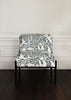
In many small UK living rooms, the most effective seating arrangement is a two-seater sofa alongside a compact lounge chair, rather than a single three-seater sofa. This creates more seating capacity in a more flexible arrangement — the chair can be repositioned, introduces a second material and silhouette, and creates a conversation arrangement that a single sofa cannot. The Colville Chair is among the most compact options in the Collection Seven lounge chair range, and its streamlined design works well alongside both the Clarendon and Courtnell sofas in smaller room arrangements.
Living Room: Ottomans for Small Spaces
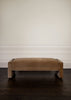
In a small living room, the central piece — ottoman or coffee table — must earn its place more than in a larger room. The Sloane Ottoman is an excellent choice: its clean box-pleat skirt and linen fabric give it a tailored, considered quality, and its three size options allow it to be specified to fit the arrangement precisely without overwhelming the available floor area. The Elgin Footstool is an even more compact option — characterful, practical and modest in its footprint.
Bedroom: Making the Most of a Compact Room
In smaller bedrooms, the bed is almost always the room's dominant piece — there is limited floor area for anything else, and the bed must be accepted as the primary visual element. The challenge is to make the bed and the small amount of furniture around it read as a considered arrangement rather than a default placement.
Bed Frame Choice
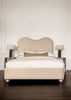
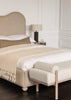
The Portobello Bed has a relatively clean profile — its arched headboard and wooden ball feet give it a distinctive character without the visual mass of a very heavily upholstered piece. In cream linen or chalk linen, it reads with a lightness that suits smaller bedrooms well. For the smallest bedrooms, the headboard height is worth considering: a lower headboard takes less vertical visual space and makes the room feel less dominated by the bed.
Bench at the Foot of the Bed
Even in a compact bedroom, a small bench at the foot of the bed adds enormously to the room's sense of completeness. A Blenheim Bench in a small size — 100cm — occupies very little floor space but changes the character of the arrangement significantly. The key is to leave at least 60cm of clear passage between the bench and the opposite wall or furniture piece, to maintain comfortable movement around the bed.
Dining: Small-Scale Dining Chairs
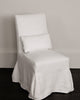
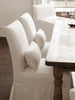
For small kitchen-diners and compact dining rooms, the dining chairs need to be functional, comfortable and proportionally modest. The Aubrey Dining Chair in its standard (armless) configuration has a relatively slim profile that suits small dining spaces well. Its floor-length linen cover creates a clean visual line from seat to floor that, paradoxically, makes the chair feel lighter in the room — the absence of visible legs beneath the cover gives it a settled, grounded quality without the visual bulk of a more structured piece.
In a small dining space, four Aubrey chairs around a compact table creates a dining arrangement that reads as genuinely considered while fitting within a modest floor plan. The linen palette — particularly ivory, chalk or cream — keeps the arrangement feeling open and light.
Fabric Choices for Small Rooms
Across all small room types, fabric choice has a proportionally larger impact than in bigger spaces. The sofa fabric is more prominent relative to the room's total surface area; the chair fabric is seen from closer distances and more angles. Getting the fabric right matters more, not less, in a compact room.
As a general principle, lighter fabrics — chalk linen, ivory boucle, cream linen, macadamia cloud linen, canvas cloud linen — make small rooms feel more spacious by reflecting light and reducing the visual weight of the principal pieces. This does not mean darker fabrics are impossible in a small room, but they require a more carefully controlled surrounding context to prevent the room from feeling enclosed.
Texture adds interest and material character without the commitment of colour, which makes boucle and cloud linen particularly useful in small rooms that need to feel furnished and considered while remaining pale and light. Always order fabric swatches and assess them in the actual room — the way a fabric reads in a compact space with specific light conditions can differ significantly from how it appears in larger showroom or photographic contexts.
The Made-to-Order Advantage in Small Spaces
For rooms with unusual dimensions — alcoves, irregular walls, spaces where a standard size is slightly too large or too small — the made-to-order model is most valuable precisely in the small space context. A sofa that is 15cm wider than the available alcove creates a problem that no styling can resolve. A sofa specified to fit that alcove correctly creates a sense of rightness that elevates the whole room.
Every Collection Seven piece is made to order in London. Conversations about non-standard sizing are a routine part of the process. Contact the team with your room dimensions and any specific constraints — the result will be furniture that genuinely belongs to the space rather than simply occupying it.