collection seven, furniture guide, interior design
Neutral Living Room Furniture Ideas
Neutral Is Not an Absence of Decision — It Is a Decision Made With Greater Care
The neutral living room is one of the most aspirational and most misunderstood categories in British interior design. The rooms that achieve it well are among the most beautiful and enduring domestic interiors in contemporary design culture. The rooms that attempt it poorly are flat, characterless and visually inert — the result of avoiding colour without understanding that avoiding colour is, itself, a design choice that demands more thought and more skill, not less.
The difference between a neutral room that sings and one that simply beiges is almost always textural and material. A well-executed neutral scheme is rich in surface quality, layered in tone, and alive with the play of light across different materials throughout the day. It locates its interest not in chromatic variety but in the contrast between different surface qualities — the smooth against the rough, the matte against the lustrous, the dense against the open.
This guide is about how to achieve that quality of neutral living room — specifically through the furniture choices that form its foundation.
The Palette Before the Pieces
Before selecting any specific piece of furniture, establish the tonal palette of the room. This means identifying the anchor tone — the colour from which everything else will take its reference — and understanding the range within which you will work.
In a neutral scheme, the anchor is usually established by the floor material or the walls. A natural timber floor or a warm-toned stone anchors the palette in warmth; a pale limestone, a bleached wood or a polished concrete anchors it in cool neutrality. From this starting point, the furniture palette should echo and extend the anchor tone rather than contradict it.
Within the neutral range, there is a significant spectrum between warm and cool. Ivory, ecru, oatmeal, bamboo, parchment and butter are all warm neutrals — they have a yellow or golden undertone that reads as welcoming and organic. Chalk, canvas, cream and stone are more central. White wash, pale grey and cool linen are cooler — they have a slightly blue or grey undertone that reads as more contemporary and restrained. Knowing which end of this spectrum your room occupies — and choosing furniture fabrics that align with it — is the foundational palette decision.
The Sofa: Setting the Primary Tone
In most living rooms, the sofa is the largest upholstered surface and therefore the most significant palette decision. In a neutral scheme, the sofa fabric establishes the primary material tone of the room — the quality from which everything else is read.
Boucle as a Foundation Fabric
Boucle has become one of the defining materials of the contemporary neutral interior, and for good reason. Its looped, textured surface creates visual and tactile interest within the neutral palette without introducing colour. It reads as warm and inviting, performs well across different light conditions, and ages gracefully. In the Collection Seven palette, the boucle range — ivory, ecru, beige, oyster, coconut, bone — spans the warm neutral spectrum and can be calibrated precisely to the room's existing tones.
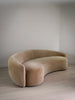
The Golborne Sofa in ecru or ivory boucle creates an immediately warm, textural primary surface that works as a foundation for a layered neutral scheme. Its curved form and the soft looped pile of the boucle work in natural correspondence — the material reinforces the warmth of the silhouette.
The Beaufort Sofa in the same material takes a more architectural approach — its continuous sweeping back and refined proportions give the boucle a more structured context, suiting rooms where a slightly more considered, less casual atmosphere is wanted.
Linen as a Foundation Fabric
Where boucle creates warmth through texture, linen creates it through material character. A linen sofa in chalk, parchment or macadamia cloud linen has a quiet authority — the natural irregularity of the weave gives the surface life without demanding attention. For rooms where restraint is the priority, linen is often the more appropriate foundation fabric than boucle.
The Albion Sofa in chalk or canvas cloud linen is a strong example of this quality — its relaxed, settled silhouette and the matte, textured surface of the linen create a piece that feels deeply at home in a neutral scheme without requiring any additional decoration to justify its presence.
The Chair: Introducing Tonal Depth
Once the sofa tone is established, the lounge chair is the most important opportunity to introduce depth into the neutral palette. The chair should be related to the sofa in tone — within the same warm or cool register — but distinct enough to create a perceptible contrast. This is the tonal dialogue that gives a neutral room its sense of dimension.
A sofa in ivory boucle sits naturally alongside a chair in fallow velvet, sandcastle velvet or oatmeal mohair velvet — all one or two shades deeper within the same warm palette. The velvet surface of the chair creates a material contrast with the boucle of the sofa while the tonal relationship remains coherent.
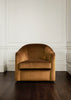
The Talbot Chair is well suited to this role. Its wide range of fabric options — spanning boucles, velvets, mohair velvets and linens — means it can be specified to sit precisely within the scheme being built. In sandcastle velvet with a bleached oak frame alongside an ivory boucle sofa, it creates a warm, considered arrangement that reads as designed rather than assembled.
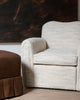
The Addison Chair, with its rounded, generous form and equally wide fabric range, creates a softer, more enveloping accent within the scheme. In coconut boucle or oatmeal mohair velvet, it sits beautifully within a warm neutral room while adding a distinctive silhouette that the sofa alone could not provide.
The Ottoman: Grounding the Arrangement
A well-placed ottoman in front of the sofa completes the seating arrangement and grounds the zone within the larger room. In a neutral scheme, the ottoman fabric should introduce yet another material layer — ideally one that contrasts in surface quality with both the sofa and the chair while remaining within the tonal palette.
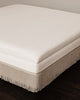
The Bridstow Ottoman, with its fringe trim and clean upholstered form, adds a decorative note to the arrangement — the fringe itself, available in pebble, snow, almond or bronze, creates a subtle textural detail at the base of the piece that rewards close attention. In ivory linen or walnut linen, it sits naturally within a neutral scheme while providing a quietly distinctive presence.
The Ledbury Ottoman takes a more restrained approach — firmly upholstered with a clean, contemporary form, it reads as an architectural element in the arrangement rather than a decorative one. In ivory boucle or chalk linen, it reinforces the material language of the sofa while providing a surface element at the centre of the seating zone.
The Role of Wood Stain Finishes
In pieces with visible wooden frames — chair legs, ottoman feet, bench supports — the choice of wood stain contributes significantly to the palette. This is a detail that is easy to overlook but that the eye registers continuously.
Bleached oak is the warmest and most organic option, with a pale, slightly golden quality that suits rooms built on natural and organic materials. White wash is similarly pale but cooler, suiting slightly more minimal or Scandinavian-inflected schemes. Walnut look brings a deeper, richer warmth — it anchors paler upholstery and creates a quality of groundedness in the arrangement. Black is the most graphic option and works well in rooms where contrast is a deliberate element of the scheme — dark legs against pale boucle or linen creates a crisp, contemporary visual rhythm.
Benches as Secondary Elements
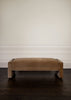
In a neutral living room, a bench placed on the far side of the central ottoman from the sofa provides additional seating and completes the definition of the zone. The Blenheim Bench, fully upholstered in oyster boucle or canvas cloud linen, creates a secondary element that relates to the sofa in material quality while providing a distinct form. Its clean, footless design reads as a simple upholstered volume — appropriate in a scheme where restraint is the governing principle.
Assembling the Scheme: A Practical Sequence
Building a neutral living room scheme works most effectively when approached in sequence rather than all at once. Start with the floor material and wall colour. Establish the anchor tone. Choose the sofa fabric first, as it occupies the most visual space and sets the primary tone. Then choose the chair, in a fabric that creates tonal depth within the established palette. Then the ottoman, in a material that contrasts in surface quality. Then the bench or secondary seating, if the room accommodates it. Then cushions, throws and accessories, which complete the layering.
At each stage, assessing fabric swatches in situ — placed on the floor of the room, in the actual light of the space — is essential. The palette must be built in the room it will inhabit, not on screen or in a showroom. The specific light conditions of your home are the only reliable judge of whether the tonal relationships are working.
Explore the full Collection Seven range to understand how the pieces and fabrics work together as a coherent system, and contact the team if you would like guidance on building a specific scheme.