collection seven, furniture guide, interior design
A Luxury Furniture Buying Guide
What Luxury Actually Means in Furniture
The word luxury is used so freely in furniture marketing that it has almost lost its meaning. It appears on everything from mass-produced sofas to genuinely hand-crafted pieces, applied without discrimination to products at almost every price point. This inflation of the term has made it almost useless as a guide to quality — and has made the task of identifying genuinely well-made furniture more rather than less difficult for the buyer.
What luxury actually means, in the context of furniture, is something quite specific: it is the quality that comes from the intersection of excellent materials, skilled craftsmanship, considered design, and the time and attention that these three things require. It is not a finish or a price point or a brand name. It is a property of the object itself — one that becomes more apparent, not less, as the piece ages and the quality of its construction is revealed through use.
This guide is about how to identify that quality, how to evaluate furniture before buying it, and how to make decisions that hold up over the years rather than just at the moment of purchase.
Start With Construction, Not Appearance
The most significant quality indicators in upholstered furniture are the ones you cannot see. The frame, the spring system, the internal upholstery work: these are entirely invisible once the piece is finished, but they determine almost entirely how the piece performs over its useful life.
The Frame
Ask specifically about the frame material and joinery method. A quality frame is built from kiln-dried hardwood — the kiln-drying process removes moisture from the timber before use, preventing the warping and twisting that occurs when green or inadequately dried timber is used in construction. Hardwoods commonly used in quality British furniture frames include ash and beech; both have excellent structural properties for upholstered furniture.
Joinery matters equally. Mortise and tenon joints, properly glued, create strong connections at the critical stress points of the frame — the corners of the seat frame, the junctions of legs and rails. These joints are more labour-intensive and more expensive than alternatives, but they are also considerably more durable. Dowel joints and block construction are acceptable in lower-stress locations but should not be used at primary structural junctions. Stapled or glued-only connections are the weakest approach and the most common indicator of compromised construction.
A quality maker will describe their frame construction willingly and in detail. Evasion or vagueness on this point is itself informative.
The Suspension System
Beneath the seat cushion, the suspension system determines how the sofa or chair feels to sit in and how it continues to feel over years of use. Hand-tied coil springs are the traditional and most durable approach — individually tensioned springs, tied in a grid pattern, distribute weight evenly across the seat and have a quality of response that foam alternatives do not replicate. They also have excellent longevity: a properly made hand-tied spring system will outlast the upholstery above it.
Serpentine (or no-sag) springs are a widely used and perfectly acceptable alternative that performs well when properly tensioned. Foam-only suspension on a webbed base is more common in lower-cost construction and is less durable over time — the foam compresses and the webbing sags, creating a seat that gradually loses its quality of support.
Cushion Specification
The fill of the seat and back cushions affects both comfort and longevity. A feather and foam combination — a foam core wrapped in a feather jacket — provides an excellent balance of support and softness, recovers well between uses, and maintains its form over time. Pure feather fills are luxuriously soft but require regular plumping and tend to migrate within the cover, creating an uneven surface. Pure foam fills are low-maintenance but have a harder, less natural quality of support and tend to deteriorate more quickly than combination fills.
The Fabric Decision
In genuinely well-made furniture, the fabric choice is as important as the construction decision — not because it affects structural longevity, but because it determines the daily experience of the piece and its visual quality over time.
Quality upholstery fabrics are distinguished from lesser alternatives by fibre type, weave construction and finishing. Natural fibres — linen, mohair, wool — age more gracefully than most synthetics, developing character rather than simply wearing. The mohair velvet palette at Collection Seven — oatmeal, smoke, dune, carob, cocoa and others — is a strong example of this category: fibres with exceptional natural properties, woven to a quality that ensures their particular character is fully expressed.
The Collection Seven fabric palette as a whole — running from the cloud linens through standard linens, boucles, velvets and mohair velvets to faux shearlings and patterns — has been assembled with an awareness of both aesthetic and practical quality. Fabric swatches are available for £3 each, and assessing them in your room is the most valuable single step in the fabric selection process.
Design Quality: The Hardest Thing to Evaluate
Construction quality can be assessed by asking specific questions. Material quality can be assessed by touch and by the maker's specification. Design quality is more elusive — it requires a different kind of evaluation.
The most useful question to ask of any furniture design is: will this still feel right in fifteen years? Not whether it feels right now — any well-made piece in good fabric will look and feel appealing when new. But whether the design has the proportional rigour and the design intelligence to remain appropriate as the room around it changes, as tastes evolve, as the piece itself ages.
Trend-led furniture fails this test almost by definition. Designs that reference current aesthetic fashion — the curves that are everywhere this season, the colour that defines this year — will date as those fashions shift. Designs that are grounded in proportional thinking and a clear understanding of function rather than fashion tend to endure.
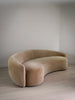
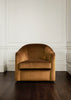
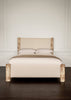
The Collection Seven range is designed with this principle explicitly in mind. The Golborne Sofa with its sculptural curved form; the Talbot Chair with its piped detail and graceful proportions; the Artesian Bed with its Poplar burr veneer posts — these are pieces designed to endure, not to respond to a season.
Seeing Pieces in Person
Reading about furniture quality and experiencing it are different things. The qualities that distinguish genuinely well-made pieces — the precision of the upholstery work, the quality of the frame, the feel of the fabric under the hand, the response of the seat when you sit in it — are largely tactile and physical. They cannot be fully conveyed in photographs or descriptions.
Selected Collection Seven pieces are on display at Gillian Jason Gallery, 19 Great Titchfield Street, London W1W 8AZ. A visit to see and sit in the pieces before ordering is well worthwhile, particularly for significant purchases. The experience of a piece in person consistently resolves uncertainties that no amount of online research can address. Contact the team to arrange a visit or to discuss specific requirements.
The Value Question
Well-made furniture costs more than poorly made furniture, and the difference in price can be significant. But cost and value are not the same thing, and in furniture the relationship between them is particularly instructive when measured over the lifetime of use rather than at the point of purchase.
A sofa purchased at a significantly lower price point and replaced every seven to ten years — which is optimistic for much of what is available in the mass market — costs more over twenty-five years than a well-made piece that endures for the same period. The mathematics are not complex. And the experiential difference — of living daily with a piece that maintains its quality and its rightness over decades versus one that gradually reveals its limitations — is real and significant.
The investment in genuinely quality furniture is not irrational luxury. It is, over the arc of use that good furniture provides, one of the most sensible decisions in furnishing a home. Explore the full Collection Seven range here.