collection seven, furniture guide, interior design
Why Investing in Furniture Is One of the Smartest Decisions You Can Make
A Different Way of Thinking About Cost
The price of genuinely well-made furniture is not small. This is acknowledged openly. A sofa handcrafted in London from quality materials, built on a proper hardwood frame by skilled craftspeople, represents a significant financial commitment. The question is not whether the cost is real — it is — but whether it is justified. And the answer to that question depends entirely on how you measure it.
If you measure it at the point of purchase, comparing the price of a quality piece with the price of a mass-produced alternative, the quality piece will almost always seem expensive. If you measure it over the lifetime of use — assessing cost per year, or cost per decade, relative to what you actually receive — the calculation changes completely. And if you factor in the daily experiential dimension — what it is like to live with furniture that maintains its quality and its rightness over years versus furniture that reveals its limitations progressively — the case for investment becomes not just financially defensible but genuinely compelling.
The Arithmetic of Replacement
The most direct economic case for quality furniture is the cost of replacement. Mass-produced furniture sold at accessible price points has a limited useful lifespan — not necessarily because it fails catastrophically, but because it deteriorates gradually in ways that accumulate over time. The frame begins to flex. The cushions lose their recovery. The fabric pills or fades. The piece begins to look and feel tired in ways that are initially acceptable but eventually require it to be replaced.
For most mass-market sofas, a realistic useful life is seven to twelve years before the piece needs to be replaced. For a well-made sofa on a quality hardwood frame with proper suspension and quality upholstery, the realistic useful life is twenty-five to thirty years or more. This is not a marketing claim — it is a consequence of the construction quality described elsewhere in this guide. A piece that is built to last will last.
The arithmetic follows from this: a mass-market sofa replaced every ten years costs, over thirty years, three times its purchase price. A quality sofa replaced once in thirty years — or not at all — costs its purchase price once. Even if the quality sofa costs three times as much initially, the lifetime cost is equivalent. If it costs less than three times as much, the quality sofa is the more economical choice over the arc of use.
Most households do not think about furniture costs this way, because the replacement cost falls in the future and the purchase cost falls now. But the calculation is real, and it consistently favours quality furniture when extended over a realistic lifespan.
The Daily Experience
Beyond the economics, there is a quality of daily experience that is difficult to quantify but impossible to dismiss. The furniture in a home is encountered every single day. The quality of a seat, the way a fabric ages, the integrity of a form over time — these are not abstract considerations. They shape how a home feels to live in, and their effect accumulates over years into something that matters.
A sofa that maintains its form and its beauty for twenty years provides a daily experience that a sofa replaced three times in the same period cannot. Each replacement creates disruption: the inconvenience of selection and purchase; the lead time and delivery; the period of adjustment as the new piece settles into the room; and eventually the slow decline that precedes the next replacement. A quality piece that simply continues to be the right piece in the right room for twenty years eliminates all of this, and replaces it with the accumulated ease of living with something that is fully settled and fully at home.
How Quality Furniture Ages
One of the most distinctive qualities of well-made furniture in quality materials is that it ages with character rather than simply deteriorating. This is not sentiment — it is an observable property of natural materials and skilled construction.
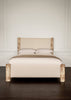
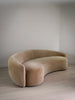
A linen sofa that has been lived on for fifteen years has a softness and ease that a new piece lacks. The fabric relaxes; the cushions settle into the specific postures of the household; the piece acquires a quality of belonging that only time can create. A mohair velvet chair, properly maintained, becomes more beautiful as its pile settles into the particular light conditions of its room — the way the pile catches morning light versus afternoon light, the specific warmth it creates in lamplight, become qualities specific to that piece in that room. A burr veneer bed like the Artesian develops an increasing sense of presence over time as the extraordinary natural patterning of the veneer becomes more deeply familiar.
These aging qualities are the opposite of deterioration. They are what distinguishes a piece made to last from a piece made to sell — and they are only achievable with the combination of quality materials, skilled construction and considered design that genuine investment in furniture provides.
Investment in Specific Pieces
Not all furniture needs to be investment-grade. Side tables, storage pieces, occasional accessories — these can be bought at lower price points without significant long-term consequence. The investment imperative applies most strongly to the anchor pieces: the primary sofa, the key lounge chair, the bed, the dining chairs that are used every day.
These are the pieces that define the character of their rooms, that are encountered most frequently, and that reward the highest quality most visibly. Investing in a Golborne Sofa or Beaufort Sofa as the primary piece in a living room, and surrounding it with more modest secondary pieces, produces better results than distributing a limited budget evenly across all pieces. Quality concentrated where it matters most is the most effective approach to furniture investment.
The Environmental Dimension
Furniture that lasts is furniture that does not need to be replaced. In a period of increasing awareness about the environmental cost of production, transportation and disposal, the case for buying once and buying well extends beyond the personal and financial into the genuinely environmental.
The production of a sofa — the extraction and processing of raw materials, the manufacturing process, the transportation — has a significant environmental footprint. A sofa that is produced once and used for thirty years has a very different lifetime environmental impact from a sofa produced three times in the same period. The quality imperative and the environmental imperative, in furniture, point in the same direction: buy well, buy once, maintain properly, and keep.
Where to Begin
Investing in furniture begins with identifying the piece that will make the greatest difference to the rooms you spend the most time in. For most households, this is the primary sofa — the piece that anchors the living room, that is used every day, and that sets the tone for everything around it. Start there. Choose it with the full care that a twenty-year commitment deserves.
Browse the full Collection Seven range to identify the pieces that suit your rooms and your sensibility. Order fabric swatches to assess the materials in your specific room conditions. And contact the team to begin a conversation about the specific piece you have in mind — the process of commissioning a made-to-order piece should feel like the beginning of a relationship with the furniture rather than a transaction, because in the best cases that is exactly what it is.