collection seven, furniture guide, interior design
How to Choose Upholstery Fabric: A Considered Guide
Fabric Is Not a Finishing Detail — It Is the Furniture
When someone sits in a chair and experiences it as beautiful, they are almost never thinking about the frame. They are responding to the fabric — its colour, its texture, the way it catches the light, the way it feels under the hand. Upholstery fabric is not the last decision in the process of choosing a piece of furniture. It is, in most cases, the most significant one.
This means that the time and care invested in fabric selection is time well spent. A well-chosen fabric can make an ordinary silhouette genuinely beautiful. A poorly chosen one can undermine even the most considered design. Understanding how to evaluate upholstery fabrics — not just visually but in terms of their material properties, their behaviour in different light conditions, their practical performance over time — is one of the most valuable skills in furnishing a home well.
Start With the Light in Your Room
The single most important context for fabric selection is the quality and direction of light in the room where the piece will live. Different fabrics behave in fundamentally different ways under different light conditions, and a fabric that is beautiful in a south-facing room can look flat or cold in a north-facing one — and vice versa.
Before considering any specific fabric, spend time in your room at different times of day. Notice the quality of the light in the morning, at midday, in the afternoon, and in the evening with artificial lighting. Note which directions the windows face. Note whether the light is warm or cool, direct or diffuse, strong or weak.
North-Facing Rooms
North-facing rooms receive cool, indirect light throughout the day. They tend to make warm fabric colours feel slightly muted and cool tones feel sharp. Fabrics with inherent warmth — boucle, linen in bamboo or parchment tones, mohair velvet in oatmeal or dune — are well suited to north-facing rooms because they bring their own warmth to a context that the light does not supply. Pale, cool-toned fabrics — pure whites, very cool greys — can feel slightly clinical in north-facing light.
South-Facing Rooms
South-facing rooms receive warm, strong, direct light for much of the day. This light amplifies colours and makes fabrics appear brighter and more saturated. Pale fabrics read beautifully in south-facing rooms but can bleach over time if exposed to sustained direct sunlight. Velvet, in particular, is susceptible to fading in direct UV — positioning velvet pieces away from south-facing windows, or using window coverings to manage light exposure, will significantly extend the life of the fabric.
East and West-Facing Rooms
East-facing rooms have bright morning light and cooler afternoons; west-facing rooms have warmer, more golden light in the afternoon and evening. Both work well with a wide range of fabrics, but the dramatic shift in light quality across the day is worth factoring into fabric choices — a fabric that looks perfect in one light condition may look quite different in another.
Understanding the Main Fabric Categories
The Collection Seven fabric palette spans five main categories: velvet (including mohair velvet), linen (including cloud linen), boucle, faux shearling, and patterns. Each has distinct material properties, aesthetic qualities and practical characteristics that make it more or less appropriate for different contexts.
Velvet
Velvet is a cut-pile fabric with a directional nap that creates depth and richness of colour. The pile's direction determines how the fabric reads from different angles — looking along the pile, it appears lighter; against it, deeper and more saturated. This directionality is one of velvet's defining qualities and contributes to its extraordinary visual depth.
Mohair velvet, which forms a significant portion of the Collection Seven palette, is distinct from standard cut velvet in several important respects. The mohair fibre — derived from the Angora goat — has a natural lustre that gives mohair velvet a subtly luminous quality that synthetic or cotton velvets do not possess. The pile is longer and softer, with a slightly more casual feel than regular cut velvet. Tones like oatmeal, smoke, dune, carob and cocoa mohair velvet have a warmth and presence that rewards sustained attention — they are fabrics that continue to reveal themselves over time rather than being immediately exhausted by a single look.
Practical considerations for velvet: it marks with sustained pressure (pile flattening is reversible with steam and gentle brushing); it requires more active maintenance than flat-weave fabrics; it is not the first choice for households with pets or very young children. For those prepared to give it appropriate care, it is one of the most rewarding upholstery choices available.
Linen
Linen is a natural fibre with an inherent variation in weave that gives it a textured, organic quality distinctly its own. Unlike synthetic flat weaves, which have a uniform, mechanical surface, linen has slight irregularities of thread thickness and weave density that make it visually alive and tactilely interesting without being conspicuous.
The Collection Seven linen palette is extensive and carefully calibrated. It runs from the palest tones — chalk, cream, ivory — through the mid-range warm neutrals — parchment, bamboo, butter — to deeper shades — espresso, walnut, truffle, terra. The cloud linen sub-category — macadamia, cotton and canvas — has a softer handle than the standard linens, with a slightly more textured surface that sits between linen and boucle in its material quality.
Linen is generally the most practical upholstery fabric for everyday use. It is strong, ages beautifully rather than deteriorating, and can be spot-cleaned relatively easily. It performs consistently across different light conditions and suits virtually any architectural context. For primary sofas in busy households, linen is almost always the most sensible starting point.
Boucle
Boucle is a looped-pile fabric — the loops of the weave are left uncut, creating a textured, somewhat irregular surface that has both tactile and visual richness. It is warmer in feel than linen and softer to the touch than velvet. It performs well in a wide range of light conditions because its textured surface creates its own visual interest regardless of the direction or quality of the light.
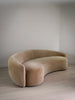
The Collection Seven boucle palette includes ivory, ecru, beige, oyster, coconut and bone — all within the warm neutral range, and all designed to work coherently with the linens and velvets in the wider palette. Boucle is particularly effective on rounded or curved silhouettes, where its soft texture adds a visual warmth that reinforces the form's inviting quality. A Golborne Sofa in ecru or ivory boucle is a good example of this correspondence between silhouette and material.
Practical considerations for boucle: the looped surface is susceptible to snagging on sharp objects or pet claws, which can pull individual loops out of the weave. This is the fabric's primary vulnerability. In households without these specific risks, boucle is a durable and very rewarding fabric choice.
Faux Shearling
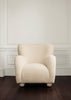
Faux shearling has a deep, soft pile that is immediately inviting. It works best on accent pieces and occasional chairs rather than primary sofas — the deep pile can flatten more quickly under sustained daily use than the harder-wearing velvets and linens. The Pembridge Chair in cream, natural or putty faux shearling is one of the most compelling applications of this fabric in the range — the curved, enveloping form and the soft pile work together to create a piece of furniture that is immediately and obviously comfortable.
Patterns
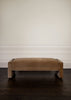
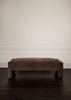
The Collection Seven pattern range includes the black and white tiger print and the autumn tapestry — both available on selected pieces. Pattern upholstery works best as a considered accent within an otherwise restrained scheme: a patterned Holland Chair or Blenheim Bench introduces personality and visual interest within a neutral room without requiring the whole scheme to commit to colour.
Durability: What to Look For
Upholstery durability is commonly measured using the Martindale rub test — a standardised method that counts how many times a fabric can be abraded before it begins to show wear. Commercial-grade fabrics typically require 30,000+ Martindale rubs; domestic-grade fabrics generally sit between 15,000 and 30,000. The fabrics used in Collection Seven pieces are selected for quality domestic performance.
Beyond rub count, consider the fibre type and construction. Natural fibres — particularly mohair and linen — tend to age more gracefully than synthetic alternatives, developing character over time rather than simply wearing. The construction method (how the pile is secured, how the weave is structured) affects how the fabric responds to sustained use. And the quality of the underlying piece matters too: a well-built frame and properly tensioned upholstery give the fabric a stable base to perform from.
The Non-Negotiable Step: Order Swatches
No guide to upholstery fabrics can substitute for the experience of holding the material in your hands and placing it in your actual room. Screen representations of fabric are always approximate — the colour rendering, the texture, the way the material catches light are all different in reality from how they appear on any screen.
Fabric swatches are available from the Collection Seven store at £3 each. This is the most important single investment in the fabric selection process. Order the three or four fabrics you are considering, place them in your room at different times of day, hold them against your existing floor and wall materials, and live with them for a few days before deciding. The knowledge this process produces — about which tone is right, which surface quality suits the room, which fabric sits most naturally within the existing palette — cannot be gained any other way.
Once you have identified the right fabric, contact the Collection Seven team to discuss the piece you have in mind. The fabric selection is the foundation — everything else follows from getting it right.