Furniture Guide
How to Choose Furniture for a Rental or First Home
Furniture for a first home or a rental gets treated as temporary, provisional, not worth much thought because the whole situation feels transitional. I understand it, but it leads to a particular kind of waste: rooms full of cheap, quick buys that satisfy nobody, look tired within a year, and get dumped at the next move.
There is a better way. Even a transitional home deserves to feel considered, and some of what you buy now can travel with you and reward you for decades. Here is how I would approach it.
Separate the foundational from the provisional
The most useful thing you can do is tell the difference between the pieces worth investing in and the pieces that can be provisional. Not everything needs to last, but some things should, and knowing which is which is how you spend well.
The foundational pieces are the ones you use most, that give you comfort and character, and that can move with you home to home. A sofa, a good bed, a lounge chair you love. Worth investing in even early, because a good one serves you across years and several homes, and the cost per year of a piece that lasts decades is far lower than a cheap thing replaced every few years.
The provisional pieces, things tied to a specific room's dimensions, or easily and cheaply replaced, can be bought pragmatically. Spending carefully there frees up budget to invest properly in the pieces that matter.
Choose pieces that travel
When you invest in a foundational piece for a first home, choose one that will work in a range of future homes, not just the room you are in now. Favour designs that are adaptable rather than tied to one architectural style, and proportions that will work in different spaces.
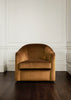
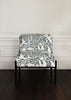
A lounge chair is one of the most portable investments you can make. Something well made like the Talbot Chair or the Colville Chair will find a place in almost any home you move to, a living room, a bedroom, a study, a reading corner, and its quality will be as obvious in your fifth home as your first. One beautiful chair, chosen well, anchors a room and signals a home furnished with intention rather than expedience.
Keep the big pieces in adaptable tones
For a piece meant to travel across future homes, a neutral, adaptable tone is the smart move. A soft neutral, cream, oatmeal, a warm boucle, works in a range of future schemes, where a bold or fashionable colour might suit this room and clash with the next.
That does not mean bland. Character can come from the shape of a piece, the quality of the making, the way you style it, without committing a major investment to a colour that will date. Keep the significant, portable pieces adaptable, and bring colour and personality in through the smaller, easily changed things.
Be honest about how you actually live
A first home or shared rental often gets a particular kind of use, more casual, sometimes more crowded, occasionally harder on the furniture than a settled family home. Choosing fabrics and pieces that suit that reality is just sensible.
A hard-wearing fabric, a durable linen, or one of the stain-resistant velvets, copes with a busy shared home far better than something that needs careful treatment. Choosing practically here is not a compromise on quality. It is choosing a quality piece in a fabric suited to how you actually live now, which is exactly right.
Buy less, buy better
The temptation is to fill the place fast, every room complete from day one. Resist it. Build the home gradually around a few well-chosen foundational pieces and you get a better home and a wiser use of money.
A room with one genuinely good piece and some space around it feels more considered than a room crammed with cheap furniture bought all at once. Start with what matters most, a good sofa, a solid bed, a chair you love, and add over time as budget allows. You end up with a home that grows with you rather than one assembled in a single anxious burst and regretted soon after.
The short version
Furnishing a first home well is not about spending the most or filling every room at once. It is about separating the foundational from the provisional, investing properly in a few pieces that will travel and reward you for decades, and choosing adaptable fabrics and forms. Do that and it feels considered now and sets the foundation for every home after.
Have a look at the full collection to find the foundational pieces worth investing in, and order swatches to choose adaptable tones. Want to talk through which pieces will serve you best? Get in touch.