collection seven, furniture guide, interior design
The Bespoke Furniture Process: What to Expect
What the Process Actually Looks Like
For many people, the idea of commissioning made-to-order or bespoke furniture is simultaneously appealing and slightly opaque. The appeal is clear — a piece made for your room, in your chosen material, to the exact dimensions you need. The opacity comes from unfamiliarity with the process: what decisions are made when, how long it takes, what you need to bring to the conversation, and what to expect at each stage.
Demystifying this process is the goal of this guide. The made-to-order process, when it is working well, should feel collaborative, clear and straightforward — a conversation between maker and client that produces a piece the client could not have bought from stock. Understanding what that conversation looks like, and how to prepare for and navigate it, makes the experience more productive and the result more precisely right.
Stage One: Understanding What You Need
The made-to-order process begins well before any contact with the maker. It begins with you understanding your own room and your own requirements — clearly enough to have a productive conversation about them.
The most important preparation is measuring the room accurately and understanding the arrangement you are trying to create. Note the total floor area and the position of all architectural features. Sketch the room to scale — even a rough sketch on graph paper is far more useful than a verbal description. Identify the position the piece will occupy and measure that space specifically: the width available for a sofa, the depth available in front of it, the height constraint imposed by a window or radiator.
Alongside the practical measurements, think about the material context. What is the floor material? What are the wall colours? What other significant pieces are already in the room, and what fabrics or materials do they use? This information — the existing palette and material character of the room — is as important to the conversation as the dimensions, because it informs the fabric selection that will follow.
Stage Two: Exploring the Range
Once you have a clear picture of your room and requirements, explore the range to identify the silhouette or silhouettes that interest you. At Collection Seven, the full collection is available to browse online, with each piece described in terms of its design and available in photography that shows it in a range of fabrics and from multiple angles.
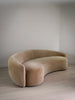
This stage is about identifying the design vocabulary that suits your room and your sensibility. Are you drawn to the clean architectural restraint of the Clarendon Sofa or the sculptural curvature of the Golborne? The structural presence of the Chepstow Bench or the quiet simplicity of the Blenheim? The enveloping warmth of the Pembridge Chair or the streamlined versatility of the Colville?
These choices are not merely aesthetic preferences — they are design decisions that will shape how the room feels and functions. Taking time at this stage to think carefully about which silhouette genuinely suits the room, rather than simply choosing what looks most appealing in a photograph, produces better results.
Stage Three: Fabric Selection
Fabric selection is the most important single decision in the made-to-order process, and it is the one that most benefits from a physical, in-room assessment rather than a screen-based one. The way a fabric reads on any screen is an approximation — affected by the screen's calibration, the photographic lighting conditions, and the absence of the specific light conditions of your room.
Fabric swatches are available from £3 each from the Collection Seven store. Order the fabrics you are genuinely considering — three or four candidates is usually enough — and place them in your room. Look at them at different times of day: morning light, midday, afternoon, evening with lamps. Place them against your floor and wall materials. Live with them for a few days before deciding.
This process consistently produces better outcomes than any other approach. The right fabric will declare itself in your room — it will read as natural and belonging in a way that the alternatives do not. The wrong choices will equally reveal themselves, often surprisingly quickly once you can see them in context.
Stage Four: Confirming the Specification
Once the silhouette and fabric have been identified, the specification is confirmed. This includes the dimensions (standard or non-standard), the fabric and wood stain choices, the configuration where options exist (two-seater, three-seater, right or left chaise), and any other details specific to the piece.
For standard dimensions and configurations, the specification can be confirmed directly through the Collection Seven website. For non-standard dimensions, bespoke configurations, or any other requirements that fall outside the standard offering, the process begins with a direct conversation with the team. Contact the team here with your room plan, your chosen piece and fabric, and any specific requirements — the team will confirm what is possible and provide a timeline and quotation for the bespoke specification.
Stage Five: Production
Once the order is confirmed, the piece enters production in the Collection Seven London workshop. The frame is built, the suspension system installed, the upholstery applied and the piece finished to the specified standard. This process — executed by skilled craftspeople working on your specific piece — takes the time it requires. Made-to-order production cannot and should not be rushed; the quality of the result depends on the craft receiving the attention it deserves.
Lead times vary depending on the piece, the specification and the current production schedule. As a general guide, most pieces are ready within several weeks to a few months of order confirmation. The team will provide a more specific timeline at the point of order.
Stage Six: Delivery
Delivery of a made-to-order piece is typically handled by specialist two-person delivery teams who are trained in the careful handling of upholstered furniture. This is not a courier delivery — it is a considered handover of a significant piece of furniture that has been made specifically for you. The delivery team will position the piece in the room as directed and take care of any packaging removal.
Before the delivery team leaves, take the time to assess the piece in position — in its actual room, in the actual light — and confirm that the specification has been met. Any concerns about the piece should be raised at this point rather than after the delivery team has departed.
The Trade Programme
For interior designers and architects working on client projects, the Collection Seven trade programme provides a framework for larger and more complex made-to-order commissions. The trade programme accommodates bespoke sizing, customer's own material (COM), and the requirements of professional project workflows. Trade enquiries are welcomed and handled directly by the team with the efficiency and flexibility that professional projects require.
The programme is designed around the reality of how design professionals work — with client deadlines, specification requirements, and the need for clear communication throughout the process. Contact the team to discuss a trade project and to register for the programme.